

Slow Travel With Kids: Seeing Less, Experiencing More


Getting to know a country has less to do with how many places you visit and more to do with how much visiting you do!
I often help families plan their travels through Guatemala. Many tell me they want to travel slowly with their kids, and then send over an itinerary with five or six destinations squeezed into two or three weeks.
I understand the temptation. Guatemala is an extraordinary country, and there are so many places worth visiting. You could spend weeks exploring its mountains, lakes, jungles, archaeological sites, and coastal communities and still have barely scratched the surface.
Unfortunately, we've become conditioned to believe that travelling means spending two nights somewhere, packing our bags, and moving on to the next destination. Increasingly, I hear people describe slow travel as doing essentially the same thing, only spending four nights instead of two.
But we need to take that idea a little further!
What Is Slow Travel, Really?
To me, slow travel isn't necessarily measured in nights. It's measured in familiarity.
It's staying somewhere long enough that you begin to carry a map of the place in your head. You know which corner to turn at to reach the market. You've walked the same streets enough times that you no longer need directions. You have a favourite place to buy chocobananos, and your children know how to get there without you.

It's having the same transaction with the same person often enough that you learn their name. It's looking forward to seeing them tomorrow. It's having someone's number saved in your phone because they sell honey or milk, or because your children have become friends and you'd like to get together again.
At some point, a destination begins to feel less like somewhere you're visiting and more like somewhere you've established a little piece of ordinary life.
That's slow travel.
And it can be surprisingly difficult to experience when you're constantly preparing to leave.
The Experiences You Can't Book
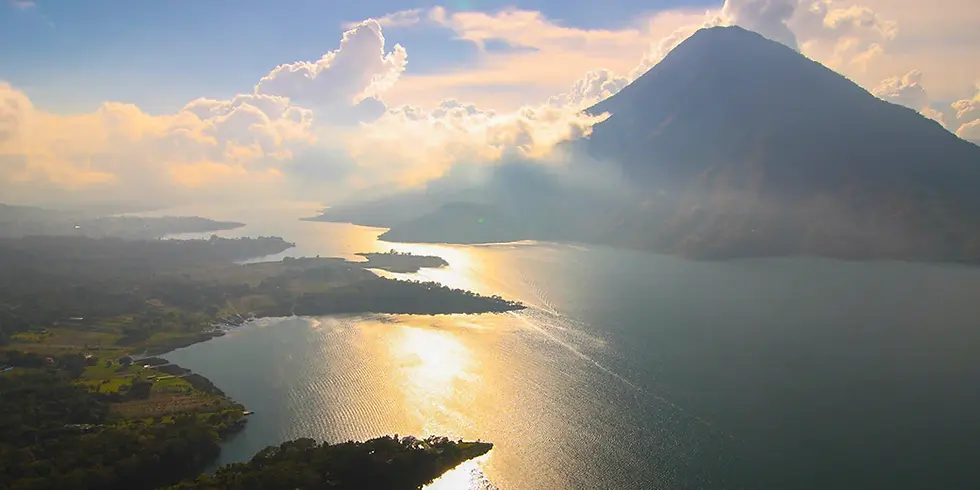
One of the things I find most beautiful about life around Lake Atitlán is how visible community life is.

Processions regularly make their way through the streets. Some are joyful celebrations, full of music and colour. Others are funerals, when family members, friends, and neighbours gather to accompany someone to the cemetery.
These moments have taught me a great deal about the way people care for one another.
Imagine you've been visiting the same little coffee shop for a week or two. You've learned the names of the people working there, perhaps chatted about their families, and begun to look forward to stopping in each morning. Then one day, the shop is closed because someone in the family has passed away.
Suddenly, the funeral procession passing through the neighbourhood isn't simply something happening around you. You know someone who is grieving. You have an opportunity to express your condolences, offer help, or just be present.
That's when your relationship with that place has changed.

A funeral isn't an experience to collect, and a friendship isn't an activity to check off an itinerary. These are people's lives. The privilege of spending time in another community is that we sometimes have the opportunity to become involved in those lives, to learn from them, and occasionally to offer something of ourselves in return.
Most vacations are understandably organized around what we hope to experience. But what if we gave a little more thought to what our presence somewhere might mean to somebody else?

Why We Build Empty Space Into Our Programs
There's an interesting contradiction in the travel industry. We've become very good at packaging 'authenticity' as though it were another product to purchase. We sell authentic meals, authentic encounters, authentic experiences, and then carefully organize every minute of them.
But authenticity isn't something you can simply add to an itinerary, and that's an important distinction in how we've developed Culture Chalk. A quick note on terms: a hub is our name for a multi-week program based in one community, where families settle in rather than pass through.
We're not trying to package authenticity and sell it to families. We're organizing the practical parts of travel so that families have the freedom to discover a place and build relationships for themselves.
We live here. The people we spend time with are our local neighbours, going about their ordinary lives. This isn't a zoo where you pay an admission fee to observe the locals. It's an invitation into our everyday lives, with the added benefit of having someone look after the mundane logistics. In tourism research, this approach is called community-based tourism, which centers local participation, cultural preservation, and economic empowerment.
We arrange accommodations, meals, activities, transportation, and introductions to local families. Those things take considerable effort to organize, particularly when you're arriving in a country where you don't yet know the language, the streets, or how things work. By taking care of those details, we hope to give families something that's often surprisingly difficult to find on vacation: time.
Time to return to the same little shop, to accept an unexpected invitation, or to spend an afternoon with a local family without worrying about where the next meal is coming from or whether they've arranged a boat ride home.

That's also why we deliberately leave so much open space in our programs. We have an entirely unscheduled day partway through most hubs, flexible afternoons, and open weekends. When families spend time together, we don't hand them a list of things they must accomplish.
We've learned that an itinerary packed with wonderful activities can still send families home more exhausted than when they arrived. Some of the most memorable afternoons begin with absolutely nothing on the schedule.

We can make introductions, remove logistical obstacles, and create opportunities for people to spend time together. But we can't manufacture friendships, and we wouldn't want to.
Those relationships have to develop naturally, in their own time, between people who genuinely enjoy one another's company.
Come Early. Stay Longer.
Something I've noticed over the years is how differently children experience a place when they've had even a little time to become familiar with it.
Families who arrive a few days before a program often have children who are eager to show the newcomers around. Suddenly they're the experts. They know where to buy chocobananos (yes, chocobananos deserve several references in one five-minute article), which streets lead where, and how to find their way back to the places they've already visited.

There's a wonderful sense of ownership that develops when children realize they can navigate somewhere that initially felt completely unfamiliar.
What Happens Toward the End of a Hub
It's quite common for families halfway through to begin asking whether they can extend their stay. Sometimes it's just another three or four days. Occasionally, families have stayed an additional month or two beyond what they originally planned.
By then, they've figured out the boats. They know where to buy groceries. Their children have made friends. The unfamiliar place that required so much planning before they arrived has become somewhere they feel comfortable spending an ordinary Tuesday.
We love encouraging families to arrive early or stay longer when their circumstances allow. If safety is what's holding you back, we've written a full guide to family travel safety in Guatemala.
There's something wonderful about having a little structure at the beginning of a trip and then discovering you no longer need quite so much of it.

A Different Way to Measure a Vacation
I'm not suggesting that families should stop exploring new places. There's enormous value in seeing Guatemala's extraordinary diversity, from its ancient Maya cities to its highland villages, jungles, rivers, and coastlines.
Every additional destination has a cost, and that cost is often time.
Time that could have been spent returning to a familiar market or letting your children see their new friends again. Time to accept an invitation, share a meal, or have a conversation that lasts longer than anyone expected.
The best measure of how well you've come to know a place may not be how many attractions you've visited, but whether you can picture its streets without looking at a map.
Whether there are people there whose names you remember and whose numbers you have saved in your phone. If, long after you've returned home, you find yourself looking forward to the day you can walk those familiar streets and see those people again, THAT is slow travel.
It's the kind of travel I hope we inspire more families to give themselves time to experience.

Keep reading:
PS: WE LOVE COMMENTS!
Owen Dargatz runs Culture Chalk alongside his wife, Christina, organizing cultural immersion experiences in Guatemala and across Latin America. Now in their sixth year living in a rural neighbourhood on Lake Atitlán, they have made community involvement central to everything they do. At its heart, Culture Chalk is about giving back to the communities that welcome them, bringing together an international community of families and local residents who learn from one another, share their skills, and collaborate in some beautiful and unexpected ways.


Comments